

How to integrate CMSIS-DSP libraries on a STM32 project
- June 3, 2024
- 20 replies
- 39212 views
Introduction
Since CMSIS V 5.8.0, the CMSIS-DSP libraries are supplied as an individual package. The advantage is to decouple the release cycles of DSP from the CMSIS-Core stuff. As a side-effect, the DSP libraries structure was changed and the steps described in the article: Configuring DSP libraries on STM32CubeIDE cannot be applied.
For that the aim of this article is to describe step by step: How to integrate this new CMSIS-DSP on an STM32 project.
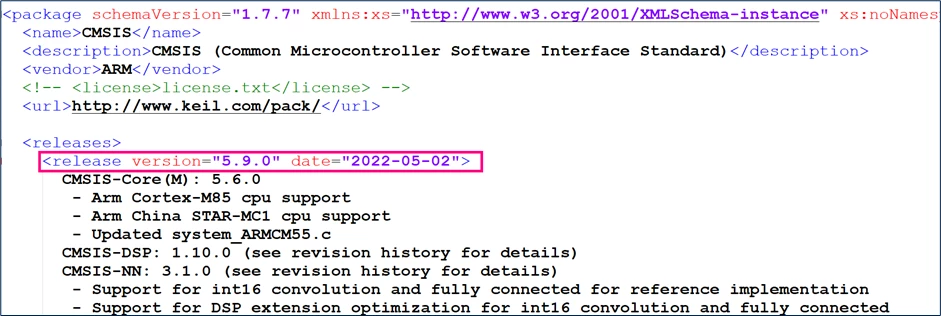
Before you get started, open the ARM.CMSIS.pdsc file in \STM32Cube_FW_xx_Vx.x.x\Drivers\CMSIS folder with notepad to know which CMSIS version is included in the package.
Software prerequisite
The versions used in this tutorial are:
- 1.15.0 for STM32CubeIDE
- 6.11.0 for STM32CubeMX
- 1.28.0 for STM32CubeF4
Step-by-step instructions
The following steps show how to integrate DSP libraries in your project when using STM32CubeIDE toolchain. For this demonstration, an example based on the STM32CubeF4 package version 1.28.0 is used.
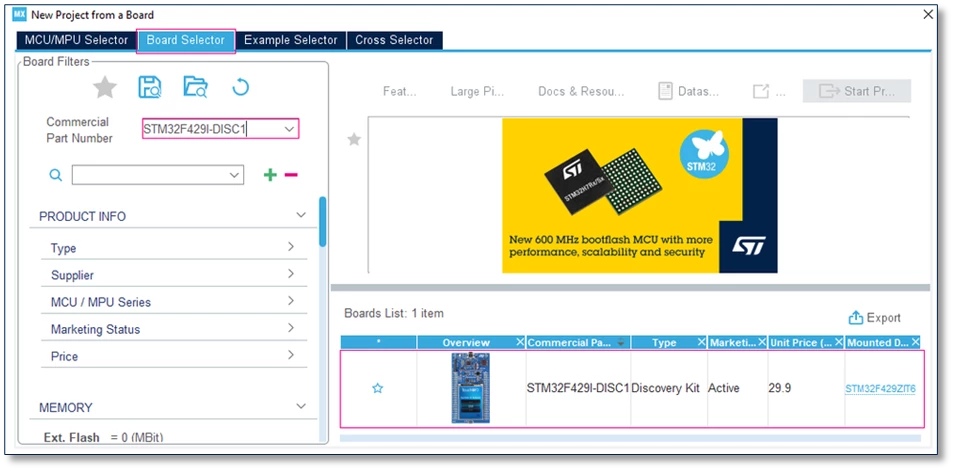
1. Create a new project using STM32CubeMX and STM32F429-DISC1 board.
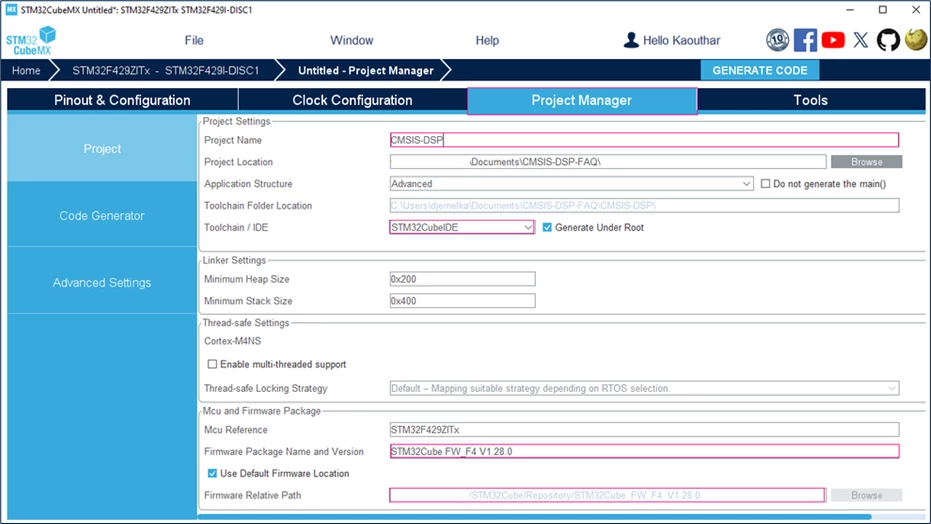
2. After finishing the settings, generate the code with the STM32CubeIDE tool chain and STM32CubeF4 1.28.0
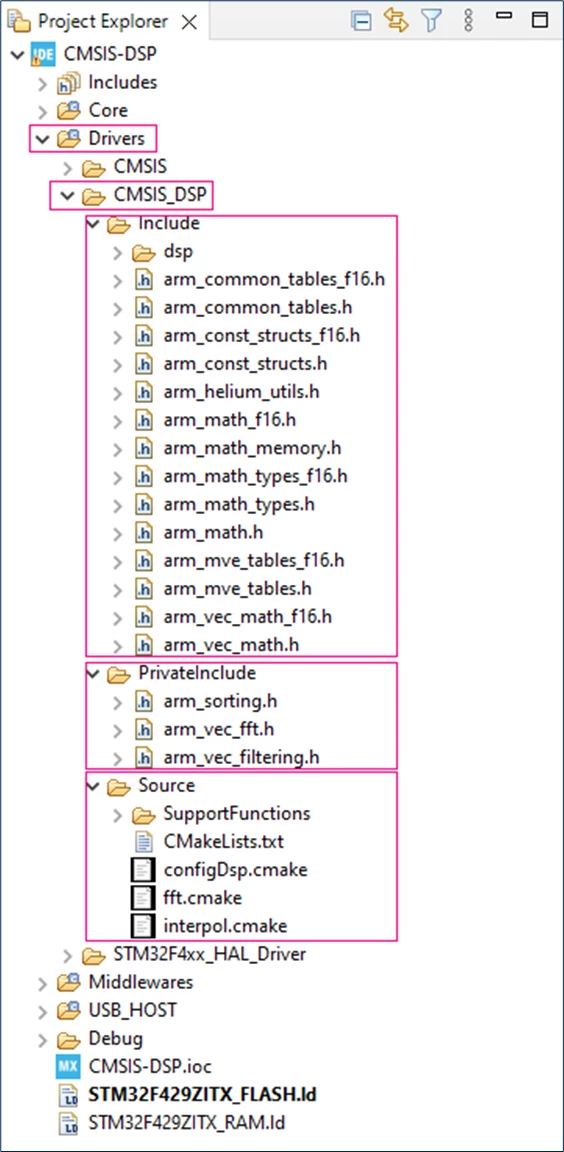
3. In the generated project, create a folder under ..\Drivers named "CMSIS_DSP"
4. Copy these folders in the created folder:
<STM32Cube_Repository>\STM32Cube_FW_F4_V1.28.0\Drivers\CMSIS\DSP\Include
<STM32Cube_Repository>\STM32Cube_FW_F4_V1.28.0\Drivers\CMSIS\DSP\PrivateInclude
<STM32Cube_Repository>\STM32Cube_FW_F4_V1.28.0\Drivers\CMSIS\DSP\Source
5. For this example, only the SupportFunctions are used. For that, open the "Source" folder under "..\Drivers\CMSIS_DSP" and keep only the SupportFunctions (other folders can be removed).
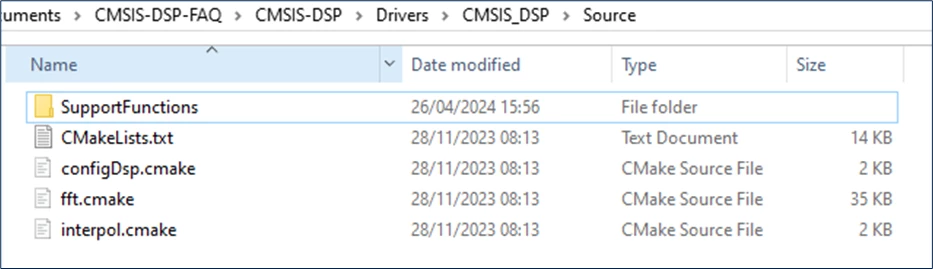
6. Make sure that you have these folders in your project with this structure
-
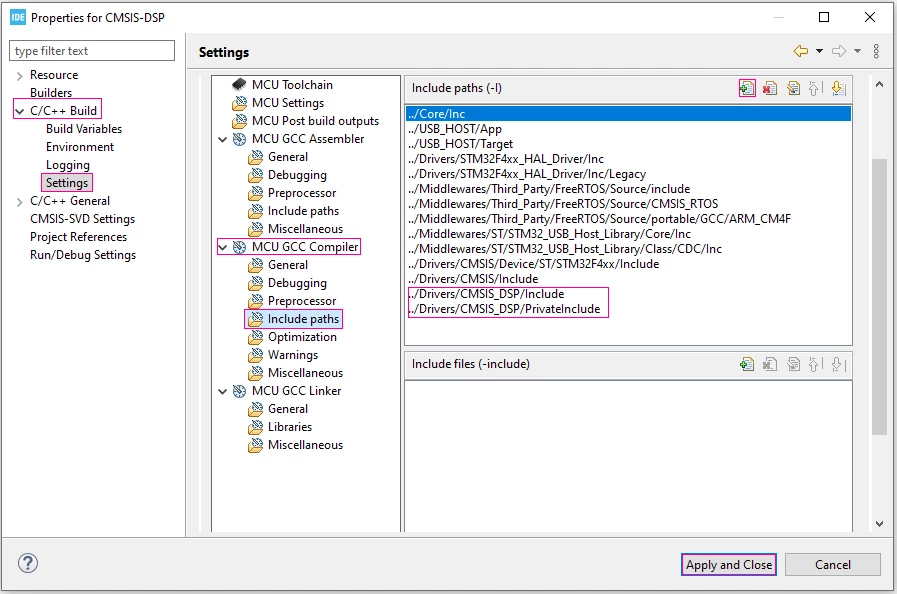
Click on [Add] to include the new paths.
-
Add the ../Drivers/CMSIS_DSP/Include path and the ../Drivers/CMSIS_DSP/PrivateInclude path
8. Open SupportFunctions.c and SupportFunctionsF16.c files and comment these lines of code:
|
File name |
Source | Comment code lines |
|
SupportFunctions.c |
Drivers\CMSIS_DSP\Source\ SupportFunctions |
|
| SupportFunctionsF16.c |
Drivers\CMSIS_DSP\Source\ SupportFunctions |
|
9. Now, you can use the DSP libraries in your project. For that open main.c and add the required header file "arm_math.h" and declare the used variables:
#include "arm_math.h"
/* USER CODE BEGIN PD */
#define FFT_Length 1024
/* USER CODE END PD */
/* USER CODE BEGIN PV */
float32_t FFT_Input_Q15_f[50];
float32_t aFFT_Input_Q15[50];
/* USER CODE END PV */
10. Let us take the example of using the “arm_float_to_q15” function:
/* USER CODE BEGIN 1 */
	arm_float_to_q15((float32_t *)&FFT_Input_Q15_f[0], (q15_t *)&aFFT_Input_Q15[0], FFT_Length*2);
/* USER CODE END 1 */
Note:
- If you use the 5.8.0 version of CMSIS or higher, follow the steps shared in this article.
- If you use a version of CMSIS less than 5.8.0, refer to Configuring DSP libraries on STM32CubeIDE - STMicroelectronics Community to add the DSP libraries in your project.
- For STM32N6 devices: add the following flag -flax-vector-conversions in Project → Properties → C/C++ Build → Settings → MCU/MPU GCC Compiler → Miscellaneous → "Other flags"
Conclusion
In conclusion, after following the steps outlined in this article, you should be able to add DSP libraries to a STM32 project. If you encounter any issues, we suggest that you create a post in the ST community for further assistance.
