

Question
STM32L152 wrong time period of the pwm signal!
Posted on October 19, 2017 at 15:17
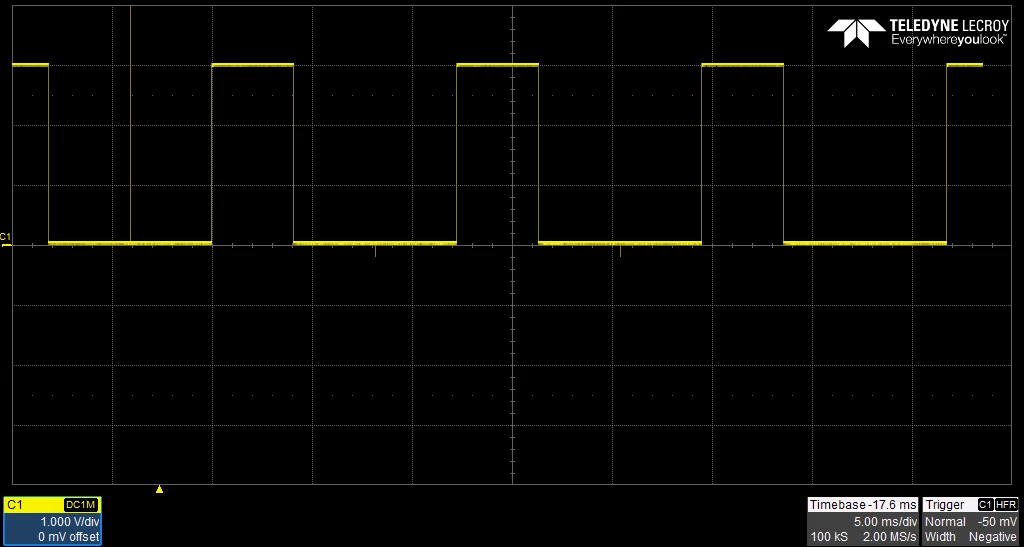
Hello
I use the STM32l152RCT6 Discovery-Board. I use the PWM over the DMA. Everything works well! But if I call my functionvStartDMA() with the PWM values 0xFF and 0x00 the result of the pwm pulses are wrong. The pwm pulse 0xFF is correct, but the pulse of the 0x00 value is2x time longer than the 0xFF pulse. Attached is a photo with the measuredPWMsignal. It should be a signal with 50% duty cycle.
Do I have wrong settings from the DMA or the used timer? Where could be the problem?
Thanks in advance!
Remo
void vInitPWM(void) {
 GPIO_InitTypeDef GPIO_InitStructure;
 TIM_TimeBaseInitTypeDef TimerInitStructure;
 TIM_OCInitTypeDef OutputChannelInit;
 NVIC_InitTypeDef NVIC_InitStructure;
 // GPIO
 RCC_AHBPeriphClockCmd(RCC_AHBPeriph_GPIOB, ENABLE);
 GPIO_InitStructure.GPIO_Pin = GPIO_Pin_11;
 GPIO_InitStructure.GPIO_Mode = GPIO_Mode_AF;
 GPIO_InitStructure.GPIO_OType = GPIO_OType_PP;
 GPIO_InitStructure.GPIO_PuPd = GPIO_PuPd_NOPULL;
 GPIO_InitStructure.GPIO_Speed = GPIO_Speed_40MHz;
 GPIO_Init(GPIOB, &GPIO_InitStructure);
 GPIO_PinAFConfig(GPIOB, GPIO_PinSource11, GPIO_AF_TIM2);
 // TIMER
 RCC_APB1PeriphClockCmd(RCC_APB1Periph_TIM2, ENABLE);
 TimerInitStructure.TIM_Prescaler = 0;
 TimerInitStructure.TIM_CounterMode = TIM_CounterMode_Up;
 TimerInitStructure.TIM_Period = 0xFFFF;
 TimerInitStructure.TIM_ClockDivision = TIM_CKD_DIV1;
 TIM_TimeBaseInit(TIM2, &TimerInitStructure);
 //PWM CHANNEL
 OutputChannelInit.TIM_OCMode = TIM_OCMode_PWM1;
 OutputChannelInit.TIM_Pulse = 0;
 OutputChannelInit.TIM_OutputState = TIM_OutputState_Enable;
 OutputChannelInit.TIM_OCPolarity = TIM_OCPolarity_Low;
 TIM_OC4Init(TIM2, &OutputChannelInit);
 TIM_OC4PreloadConfig(TIM2, TIM_OCPreload_Enable);
 TIM_ARRPreloadConfig(TIM2, ENABLE);

 TIM_CCxCmd(TIM2, TIM_Channel_4, TIM_CCx_Enable);
 TIM_Cmd(TIM2, ENABLE);

 // DMA
 RCC_AHBPeriphClockCmd(RCC_AHBPeriph_DMA1, ENABLE);
 TIM_DMACmd(TIM2, TIM_DMA_CC4, ENABLE);
 DMA_ITConfig(DMA1_Channel7, DMA_IT_TC, ENABLE);
 // NVIC for DMA
 NVIC_InitStructure.NVIC_IRQChannel = DMA1_Channel7_IRQn;
 NVIC_InitStructure.NVIC_IRQChannelPreemptionPriority = 0;
 NVIC_InitStructure.NVIC_IRQChannelSubPriority = 0;
 NVIC_InitStructure.NVIC_IRQChannelCmd = ENABLE;
 NVIC_Init(&NVIC_InitStructure);
}�?�?�?�?�?�?�?�?�?�?�?�?�?�?�?�?�?�?�?�?�?�?�?�?�?�?�?�?�?�?�?�?�?�?�?�?�?�?�?�?�?�?�?�?�?�?�?�?�?�?�?�?�?�?�?�?�?�?�?�?�?�?�?�?�?�?�?�?�?�?�?�?�?�?�?�?�?�?�?�?�?�?�?�?�?�?�?�?�?�?�?�?�?�?�?�?�?�?�?�?�?�?�?�?�?�?�?�?�?�?�?�?�?�?�?�?�?�?�?�?�?�?�?�?�?�?�?�?�?�?�?�?�?�?�?�?�?�?�?�?�?�?�?�?�?�?�?�?�?�?�?�?�?
void vStartDMA(uint8_t *PtrDataToSend, uint16_t LengthOfData) {
 /* DMA Channel7 Configuration ----------------------------------------------*/
 DMA_InitTypeDef DMAInitStructure;
 if (!DMA_BUSY) {
 DMA_BUSY = TRUE;
 DMAInitStructure.DMA_DIR = DMA_DIR_PeripheralDST,
 DMAInitStructure.DMA_BufferSize = LengthOfData,
 DMAInitStructure.DMA_MemoryBaseAddr = (uint32_t) PtrDataToSend,
 DMAInitStructure.DMA_MemoryDataSize = DMA_MemoryDataSize_Byte,
 DMAInitStructure.DMA_MemoryInc = DMA_MemoryInc_Enable,
 DMAInitStructure.DMA_Mode = DMA_Mode_Normal,
 DMAInitStructure.DMA_PeripheralBaseAddr = (uint32_t) & TIM2->CCR4,
 DMAInitStructure.DMA_PeripheralDataSize = DMA_PeripheralDataSize_Byte,
 DMAInitStructure.DMA_PeripheralInc = DMA_PeripheralInc_Disable,
 DMAInitStructure.DMA_Priority = DMA_Priority_VeryHigh,
 DMAInitStructure.DMA_M2M = DMA_M2M_Disable;
 DMA_Cmd(DMA1_Channel7, DISABLE);
 DMA_Init(DMA1_Channel7, &DMAInitStructure);
 DMA_Cmd(DMA1_Channel7, ENABLE);
 TIM_DMACmd(TIM2, TIM_DMA_CC4, ENABLE);
 }
}�?�?�?�?�?�?�?�?�?�?�?�?�?�?�?�?�?�?�?�?�?�?�?�?�?�?�?�?�?�?�?�?�?�?�?�?�?�?�?�?�?�?�?�?�?�?�?�?�?�?�?�?�?�?�?�?�?�?�?�?�?�?�?�?�?�?�?�?�?�?�?�?
void DMA1_Channel7_IRQHandler()
 {
 disableInterrupts();

 //NoInterrupts lock;
 DMA_ClearITPendingBit(DMA1_IT_TC7);
 DMA_Cmd(DMA1_Channel7, DISABLE);
 DMA_BUSY = FALSE;
 enableInterrupts();
 }�?�?�?�?�?�?�?�?�?�?�?�?�?�?�?�?�?�?�?�?�?�?�?�?�?�?�?�?�?�?�?�?�?