Solved
STM32F4 SPI-DMA with daisy chain not working. Problem with NSS signal.
I have done an SPI transfer only with DMA and working fine, but when I need to do a daisy chain configuration its not working. I am suspecting the NSS signal.
below is SPI configuration
#define SPIx_Mode SPI_MODE_MASTER
#define SPIx_Direction SPI_DIRECTION_2LINES
#define SPIx_DataSize SPI_DATASIZE_16BIT
#define SPIx_ClkPolarity SPI_POLARITY_LOW
#define SPIx_ClkPhase SPI_PHASE_1EDGE
#define SPIx_Nss SPI_NSS_SOFT
#define SPIx_BaudRatePrescaler SPI_BAUDRATEPRESCALER_4
#define SPIx_FirstBit SPI_FIRSTBIT_MSB
#define SPIx_TiMode SPI_TIMODE_ENABLE
#define SPIx_CrcCalc SPI_CRCCALCULATION_DISABLE
#define SPIx_CrcPolynomial 0
Below is DMA configuration
(DMA_MINC_DISABLE is used in case of single transfer)
 hdma_tx.Instance = SPIx_TX_DMA_STREAM;
 hdma_tx.Init.Channel = SPIx_TX_DMA_CHANNEL;
 hdma_tx.Init.Direction = DMA_MEMORY_TO_PERIPH;
 hdma_tx.Init.PeriphInc = DMA_PINC_DISABLE;
 hdma_tx.Init.MemInc = DMA_MINC_ENABLE;//DMA_MINC_DISABLE;
 hdma_tx.Init.PeriphDataAlignment = DMA_PDATAALIGN_HALFWORD;
 hdma_tx.Init.MemDataAlignment = DMA_MDATAALIGN_HALFWORD;
 hdma_tx.Init.Mode = DMA_NORMAL;
 hdma_tx.Init.Priority = DMA_PRIORITY_HIGH;
 hdma_tx.Init.FIFOMode = DMA_FIFOMODE_DISABLE;
 hdma_tx.Init.FIFOThreshold = DMA_FIFO_THRESHOLD_FULL;
 hdma_tx.Init.MemBurst = DMA_MBURST_INC4;
 hdma_tx.Init.PeriphBurst = DMA_PBURST_INC4;
TI mode is enabled.
 #define SPIx_NSS_Mode GPIO_MODE_AF_PP
 #define SPIx_NSS_Pull GPIO_PULLUP
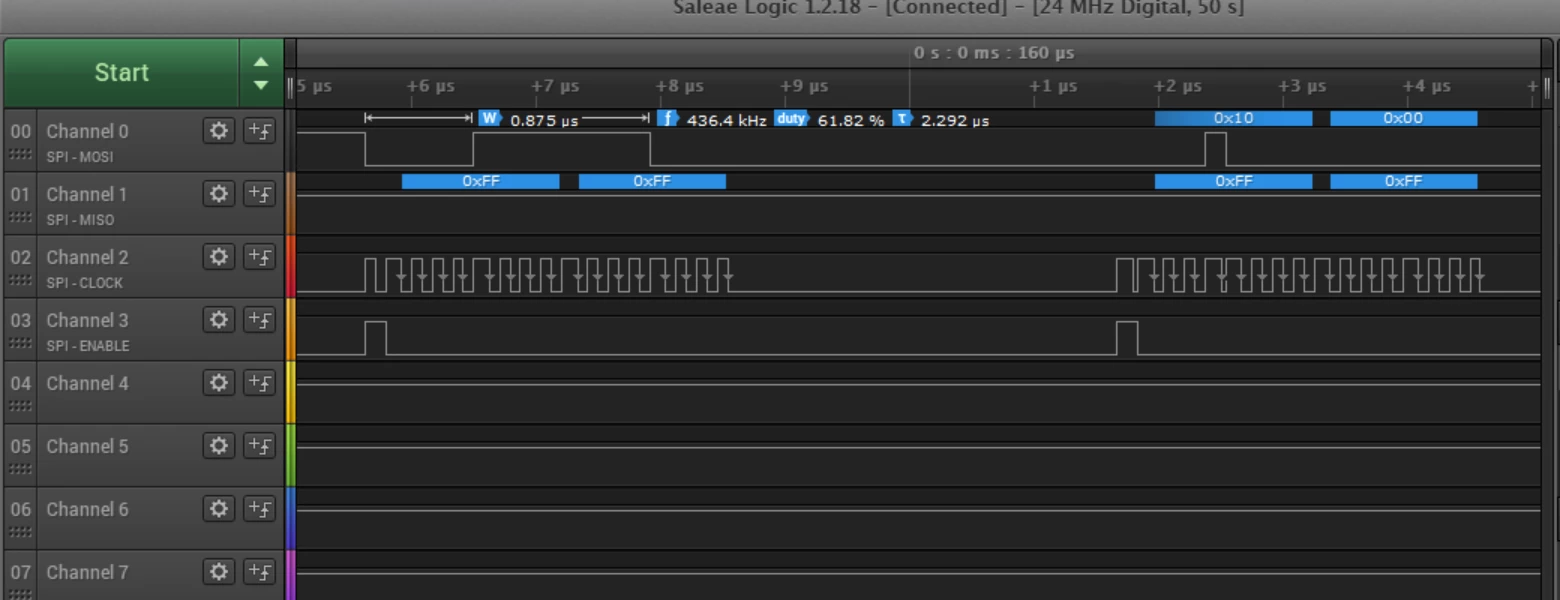
Without Daisy, waveform(below)
With daisy waveform(below)
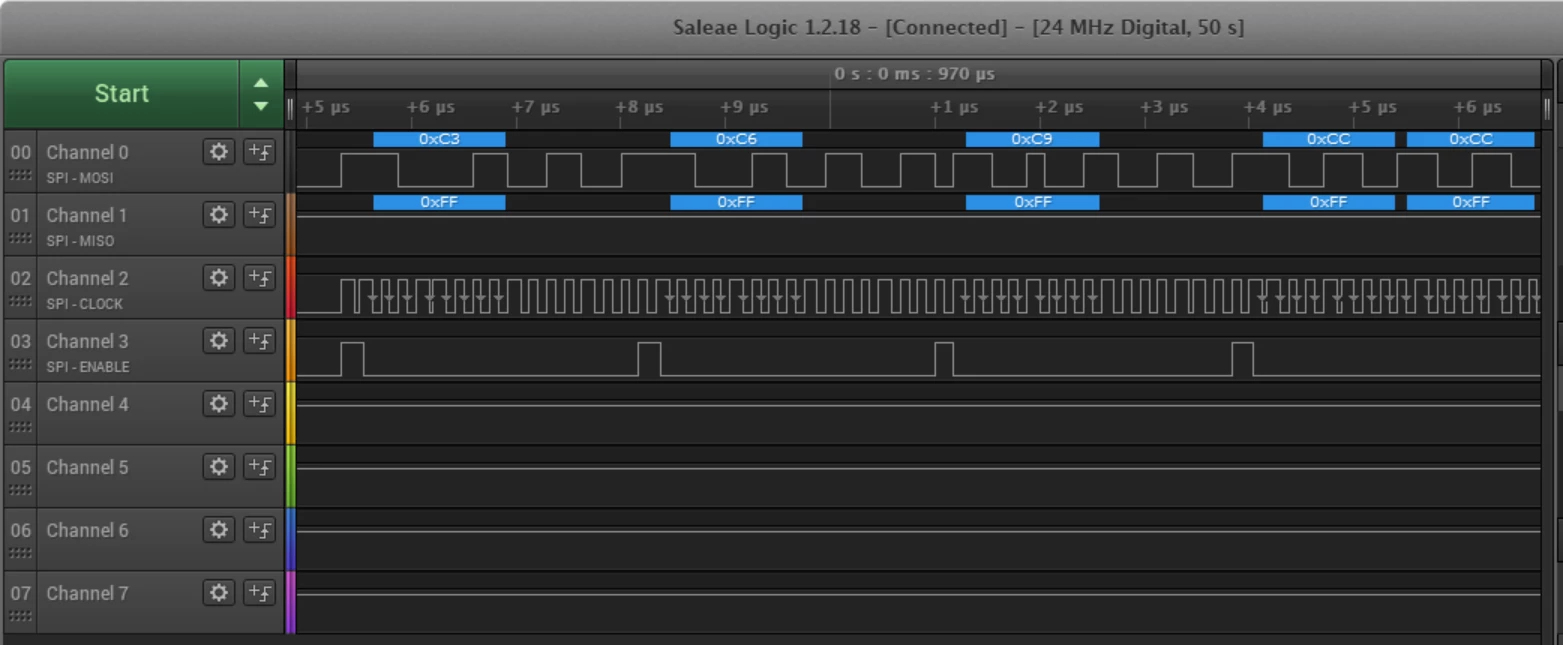 in the above picture NSS is coming in between.
 uInt16 aTxBuffer[4] = {0xC333, 0xC666, 0xC999, 0xCCCC}; // sample data

 HAL_GPIO_WritePin(SPIx_NSS_Port, SPIx_NSS_Pin, GPIO_PIN_RESET);
 spi5_dataTransfer(aTxBuffer);
 HAL_GPIO_WritePin(SPIx_NSS_Port, SPIx_NSS_Pin, GPIO_PIN_SET);


void spi5_dataTransfer(uint16_t *TxBuffer)
{
// HAL_GPIO_WritePin(SPIx_NSS_Port, SPIx_NSS_Pin, GPIO_PIN_RESET);
 HAL_SPI_Transmit_DMA(&SPIx_handle, (uint8_t *)TxBuffer, 4u);
 while (HAL_SPI_GetState(&SPIx_handle) != HAL_SPI_STATE_READY);
 // After successful transfer NSS is put high from HAL_SPI_TxCpltCallback.
}
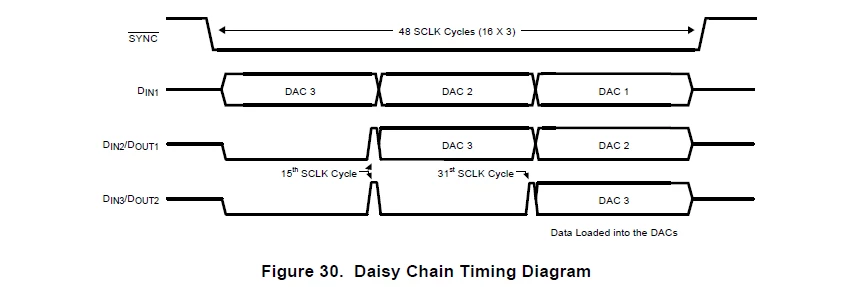
please help to achieve like below