
QSPI STM32F767xx reads wrong data
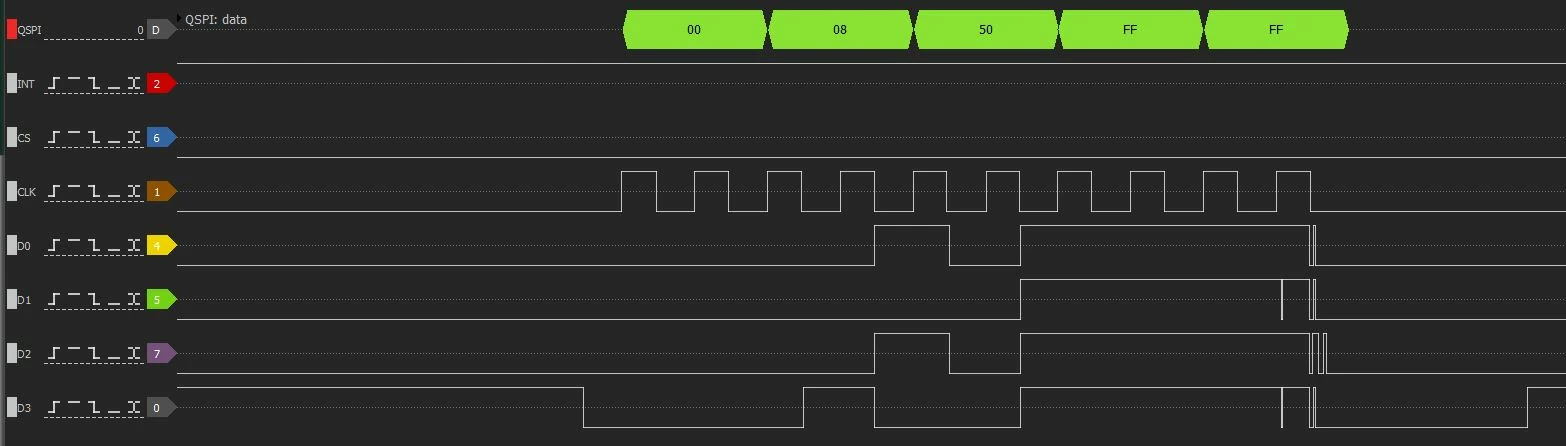
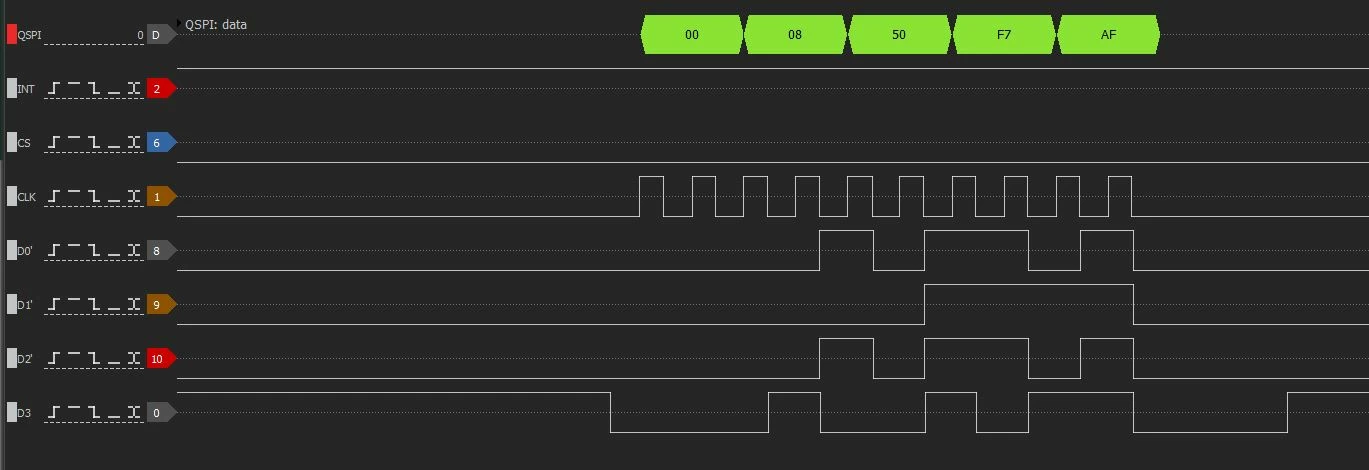 Using STM32F767xx as QSPI master and Cortex M33 as a slave
While reading the header (4 bytes) i see the first 2 bytes are correct always and the last 2 bytes as 0xFF's. If i take a capture directly from the QSPI pins on the slave i see correct values but as soon as i connect STM and capture on the STM QSPI lines it's all wrong.
GPIO configurations :
GPIO_InitStruct.Pin = GPIO_PIN_2;
GPIO_InitStruct.Mode = GPIO_MODE_AF_PP;
GPIO_InitStruct.Pull = GPIO_NOPULL;
GPIO_InitStruct.Speed = GPIO_SPEED_FREQ_LOW;
GPIO_InitStruct.Alternate = GPIO_AF9_QUADSPI;
HAL_GPIO_Init(GPIOE, &GPIO_InitStruct);
GPIO_InitStruct.Pin = GPIO_PIN_2;
GPIO_InitStruct.Mode = GPIO_MODE_AF_PP;
GPIO_InitStruct.Pull = GPIO_NOPULL;
GPIO_InitStruct.Speed = GPIO_SPEED_FREQ_LOW;
GPIO_InitStruct.Alternate = GPIO_AF9_QUADSPI;
HAL_GPIO_Init(GPIOB, &GPIO_InitStruct);
GPIO_InitStruct.Pin = GPIO_PIN_10;
GPIO_InitStruct.Mode = GPIO_MODE_OUTPUT_PP;
GPIO_InitStruct.Speed = GPIO_SPEED_FREQ_LOW;
HAL_GPIO_Init(GPIOB, &GPIO_InitStruct);
GPIO_InitStruct.Pin = GPIO_PIN_11|GPIO_PIN_12|GPIO_PIN_13;
GPIO_InitStruct.Mode = GPIO_MODE_AF_PP;
GPIO_InitStruct.Pull = GPIO_NOPULL;
GPIO_InitStruct.Speed = GPIO_SPEED_FREQ_LOW;
GPIO_InitStruct.Alternate = GPIO_AF9_QUADSPI;
HAL_GPIO_Init(GPIOD, &GPIO_InitStruct);
QSPI Initialization :
hqspi.Instance = QUADSPI;
hqspi.Init.ClockPrescaler = 4;
hqspi.Init.FifoThreshold = 8;
hqspi.Init.SampleShifting = QSPI_SAMPLE_SHIFTING_NONE;
hqspi.Init.FlashSize = 10;
hqspi.Init.ChipSelectHighTime = QSPI_CS_HIGH_TIME_1_CYCLE;
hqspi.Init.ClockMode = QSPI_CLOCK_MODE_0;
hqspi.Init.FlashID = QSPI_FLASH_ID_1;
hqspi.Init.DualFlash = QSPI_DUALFLASH_DISABLE;
Command :
sCommand.Instruction = 0x35;
sCommand.DummyCycles = 0;
sCommand.NbData = spiSize;
sCommand.InstructionMode = QSPI_INSTRUCTION_4_LINES;
sCommand.AddressMode = QSPI_ADDRESS_NONE;
sCommand.AlternateByteMode = QSPI_ALTERNATE_BYTES_NONE;
sCommand.DataMode = QSPI_DATA_4_LINES;
sCommand.SIOOMode = QSPI_SIOO_INST_EVERY_CMD;
sCommand.DdrMode = QSPI_DDR_MODE_DISABLE;
Attached both valid and invalid captures for reference