
Differences between with and without SMPS
There are two variants, STM32H7B3IIT6 without SMPS and STM32H7B3IIT6Q with SMPS. What are the differences between using or not using SMPS? Why is it preferred with SMPS?
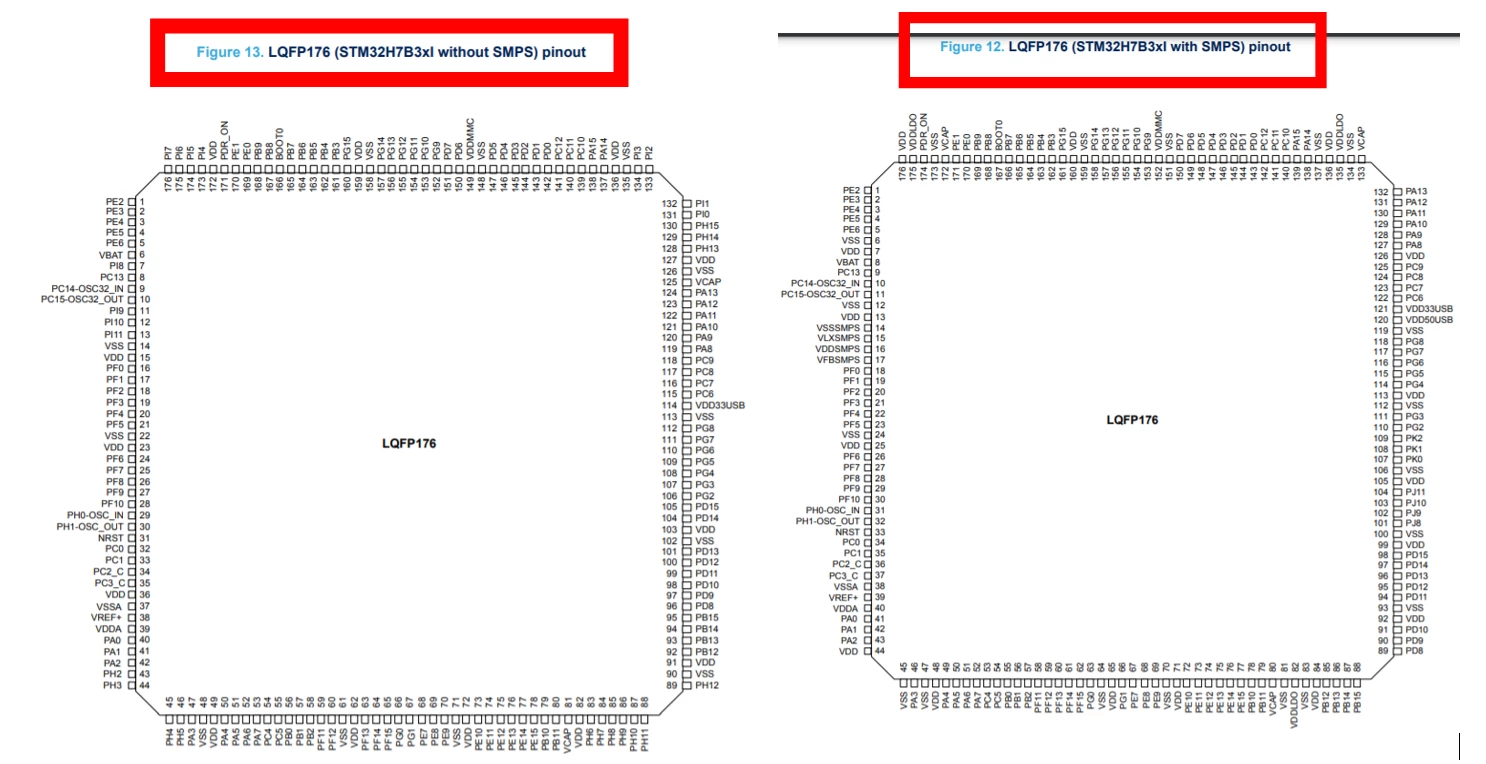

There are two variants, STM32H7B3IIT6 without SMPS and STM32H7B3IIT6Q with SMPS. What are the differences between using or not using SMPS? Why is it preferred with SMPS?

You will find the answer in the datasheet, section 3.5.4: The built-in SMPS step-down converter is a highly power-efficient DC/DC non-linear switching regulator that provides lower power consumption than a conventional voltage regulator (LDO).
Without SMPS, the STM32H7B3 is supplied via a built-in LDO, i.e. a linear regulator, which "burns" the differential voltage between VDD and VCORE. If, on the other hand, an SMPS (switched mode power supply) is included (requires a few pins), the differential voltage can be regulated by a step-down regulator, which is considerably more energy-efficient.
Regards
/Peter
Enter your E-mail address. We'll send you an e-mail with instructions to reset your password.