
Vmere.1
Associate III
August 3, 2022
Solved

Bitwise

  • August 3, 2022
  • 3 replies
  • 1707 views

"I'll delete this question once someone answers it, as it is not relevant".
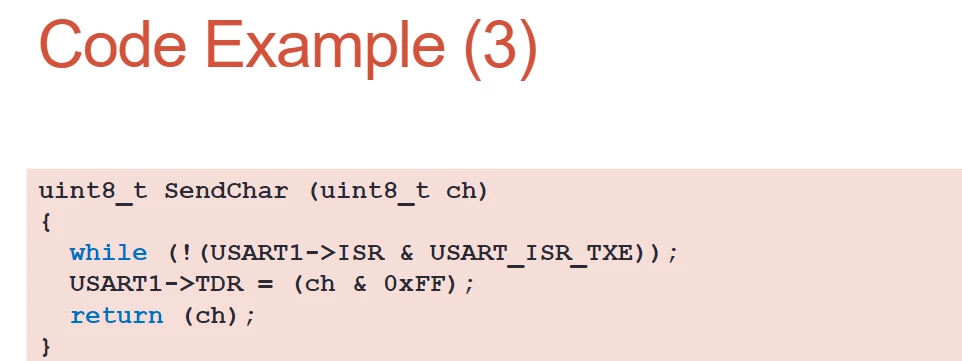
0693W00000QMqCCQA1.pngWhy in second line did some one write ch & 0xFF? ch limits are already 0 to 255 right?

    This topic has been closed for replies.
    Best answer by Tesla DeLorean

    The copy-n-paste coder here took code that use int originally for the parameter/return and changed it to a uint8_t

    Classically C libraries have returned negative values for failure around STDIO routines.

    The TDR here is 16-bit wide as the U(S)ART support 9-bit values. When reading RDR and using parity, the code needs to strip the parity bit manually/

    3 replies

    S.Ma
    Principal
    August 3, 2022

    Maybe because function content was copy pasted from elsewhere which ch may not have been uint8_t. Anyway, compiler are not dumb, they will optimise this, no sweat.

    KnarfB
    Super User
    August 3, 2022

    You're right. The &0xFF is useless here.

    hth

    KnarfB

    Vmere.1
    Vmere.1Author
    Associate III
    August 4, 2022

    I'm new to C programming, development and not very confident but after few months (till today) I got used to programming and sometime still don't feel 100% confident, don't know why! But i feel that this emotion will be gone gradually.​

    Tesla DeLorean
    Tesla DeLoreanBest answer
    Guru
    August 3, 2022

    The copy-n-paste coder here took code that use int originally for the parameter/return and changed it to a uint8_t

    Classically C libraries have returned negative values for failure around STDIO routines.

    The TDR here is 16-bit wide as the U(S)ART support 9-bit values. When reading RDR and using parity, the code needs to strip the parity bit manually/

    Tips, Buy me a coffee, or three.. PayPal VenmoUp vote any posts that you find helpful, it shows what's working..