
Caan
Associate III
July 2, 2024
Solved

ADE9000 COMMUNICATION PROBLEM WITH STM32F401

  • July 2, 2024
  • 1 reply
  • 2198 views

I have setup a base board of ADE9000 With only Basic Components connected, Like Bypass capacitors, Reset pullups and connected SPI Directly with the STM32F401 Blackpill board , Everything starts-up perfectly.
So I want to check the communication between the MCU and AE9000, So To read the Register value at 0x4FE (Version of ADE9000) I am sending 0x4FE8 (8 Is added so as to set bit 3 High For read Command) But I am only getting 0xfffc and 0xfff8 in random patterns.
SPI for STM32F4 is set to 16 bits with Mode 0 Configuration and I am checking the data using Logic Analyzer which check out that the data sent from the MCU is 0x4FE8 but receiving is 0xfffc and/or 0xfff8

Best answer by Andrew Neil

@Caan wrote:

I have setup a base board of ADE9000 


You mean this: https://www.analog.com/en/products/ade9000.html ?
Is that a custom board you've made yourself, or something from ADI? or 3rd party?

Please post your code & schematics, and logic analyser traces - see:

https://community.st.com/t5/community-guidelines/how-to-write-your-question-to-maximize-your-chances-to-find-a/ta-p/575228

Some good, clear photos of your setup would also help.


@Caan wrote:

 I am checking the data using Logic Analyzer which check out that the data sent from the MCU is 0x4FE8 but receiving is 0xfffc and/or 0xfff8


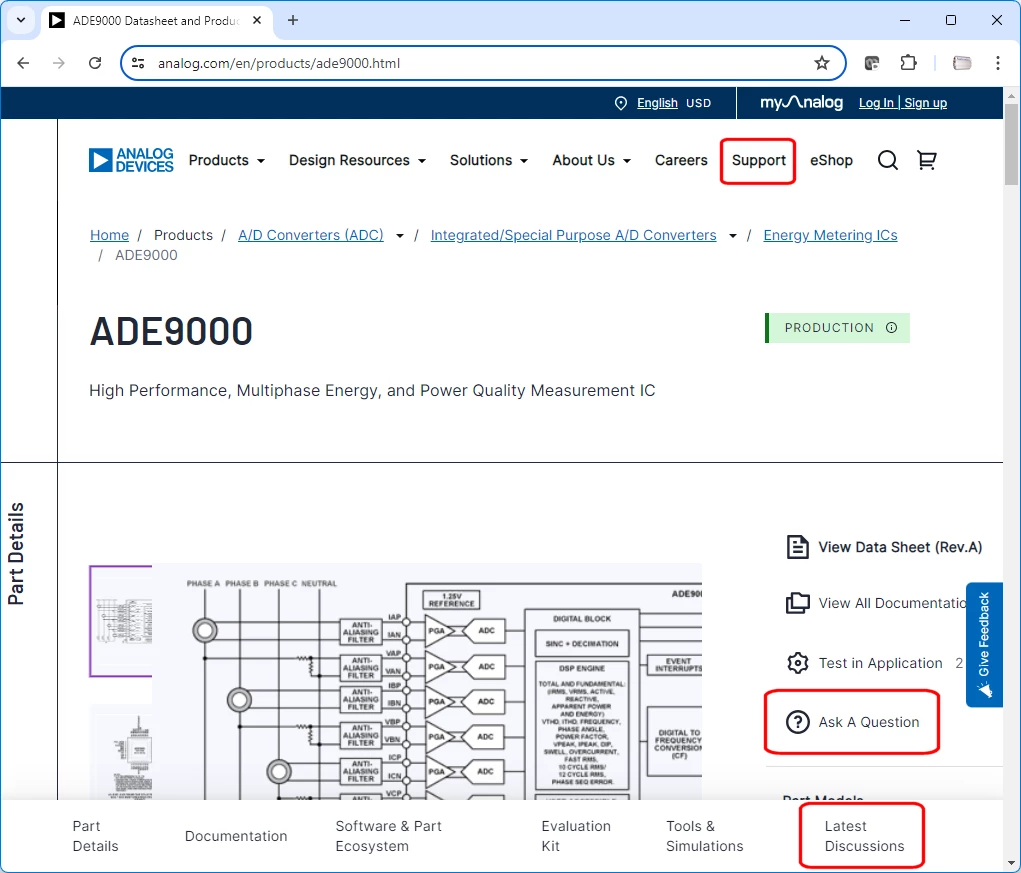
Have you shown ADI the traces? It's their chip, so they'd be best to spot anything that's not right in your comms...

AndrewNeil_0-1719915186121.png


EDIT:

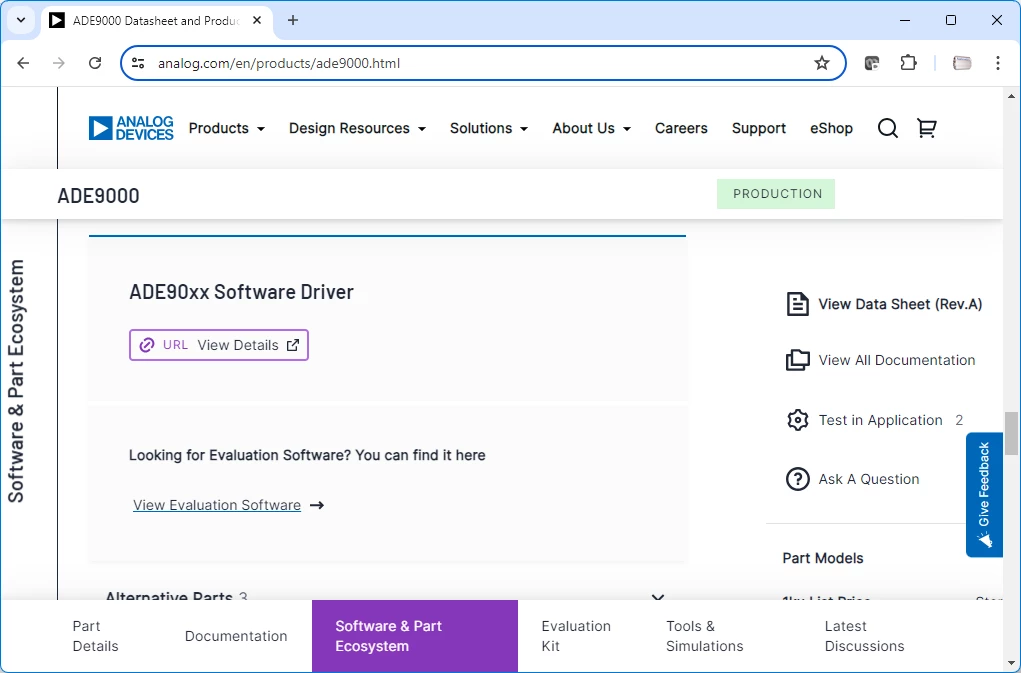
Have you tried the Software Driver which ADI provide?

AndrewNeil_0-1719915564756.png


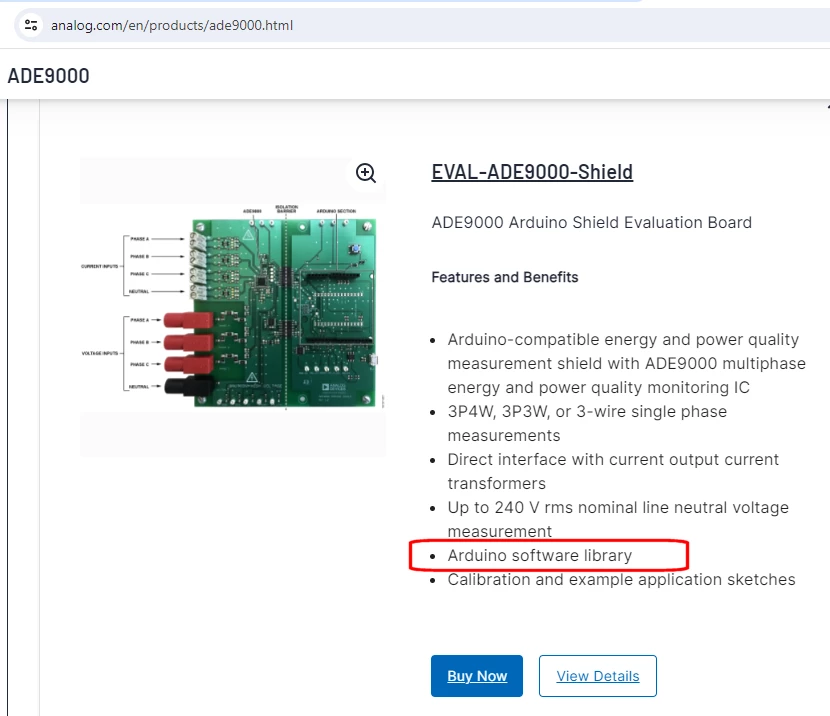
It seems there's an Arduino library available:

AndrewNeil_1-1719915747180.png


1 reply

Andrew Neil
Andrew NeilBest answer
Super User
July 2, 2024

@Caan wrote:

I have setup a base board of ADE9000 


You mean this: https://www.analog.com/en/products/ade9000.html ?
Is that a custom board you've made yourself, or something from ADI? or 3rd party?

Please post your code & schematics, and logic analyser traces - see:

https://community.st.com/t5/community-guidelines/how-to-write-your-question-to-maximize-your-chances-to-find-a/ta-p/575228

Some good, clear photos of your setup would also help.


@Caan wrote:

 I am checking the data using Logic Analyzer which check out that the data sent from the MCU is 0x4FE8 but receiving is 0xfffc and/or 0xfff8

Have you shown ADI the traces? It's their chip, so they'd be best to spot anything that's not right in your comms...

AndrewNeil_0-1719915186121.png


EDIT:

Have you tried the Software Driver which ADI provide?

AndrewNeil_0-1719915564756.png


It seems there's an Arduino library available:

AndrewNeil_1-1719915747180.png


A complex system that works is invariably found to have evolved from a simple system that worked.A complex system designed from scratch never works and cannot be patched up to make it work.
Caan
CaanAuthor
Associate III
July 2, 2024

Caan_1-1719916076598.png

Caan_2-1719916082870.png


I have made a custom board for ADE9000

Code

/* USER CODE BEGIN Header */
/**
 ******************************************************************************
 * @file : main.c
 * @brief : Main program body
 ******************************************************************************
 * @attention
 *
 * Copyright (c) 2024 STMicroelectronics.
 * All rights reserved.
 *
 * This software is licensed under terms that can be found in the LICENSE file
 * in the root directory of this software component.
 * If no LICENSE file comes with this software, it is provided AS-IS.
 *
 ******************************************************************************
 */
/* USER CODE END Header */
/* Includes ------------------------------------------------------------------*/
#include "main.h"
 uint8_t txData;
 uint16_t rxData;
 uint16_t LOW=0XB8;
 uint16_t HIGH=0x00B8;
 
SPI_HandleTypeDef hspi1;
 
void SystemClock_Config(void);
static void MX_GPIO_Init(void);
static void MX_SPI1_Init(void);
 
int main(void)
{
 
 HAL_Init();
 
 SystemClock_Config();
 
 MX_GPIO_Init();
 MX_SPI1_Init();
 

 while (1)
 {
	 HAL_GPIO_WritePin(GPIOA, GPIO_PIN_4, GPIO_PIN_RESET);

	 //temp_address = (((0x25d << 4) & 0xFFF0) + 8);

	 if (HAL_SPI_TransmitReceive(&hspi1,&HIGH,&rxData, 1, HAL_MAX_DELAY) != HAL_OK)
	 {
	 // Transmission error
	 Error_Handler();
	 }


	 HAL_GPIO_WritePin(GPIOA, GPIO_PIN_4, GPIO_PIN_SET);
	 HAL_Delay(100);
 }
}

/**
 * @brief System Clock Configuration
 * @retval None
 */
void SystemClock_Config(void)
{
 RCC_OscInitTypeDef RCC_OscInitStruct = {0};
 RCC_ClkInitTypeDef RCC_ClkInitStruct = {0};

 /** Configure the main internal regulator output voltage
 */
 __HAL_RCC_PWR_CLK_ENABLE();
 __HAL_PWR_VOLTAGESCALING_CONFIG(PWR_REGULATOR_VOLTAGE_SCALE2);

 /** Initializes the RCC Oscillators according to the specified parameters
 * in the RCC_OscInitTypeDef structure.
 */
 RCC_OscInitStruct.OscillatorType = RCC_OSCILLATORTYPE_HSE;
 RCC_OscInitStruct.HSEState = RCC_HSE_ON;
 RCC_OscInitStruct.PLL.PLLState = RCC_PLL_ON;
 RCC_OscInitStruct.PLL.PLLSource = RCC_PLLSOURCE_HSE;
 RCC_OscInitStruct.PLL.PLLM = 25;
 RCC_OscInitStruct.PLL.PLLN = 168;
 RCC_OscInitStruct.PLL.PLLP = RCC_PLLP_DIV2;
 RCC_OscInitStruct.PLL.PLLQ = 4;
 if (HAL_RCC_OscConfig(&RCC_OscInitStruct) != HAL_OK)
 {
 Error_Handler();
 }

 /** Initializes the CPU, AHB and APB buses clocks
 */
 RCC_ClkInitStruct.ClockType = RCC_CLOCKTYPE_HCLK|RCC_CLOCKTYPE_SYSCLK
 |RCC_CLOCKTYPE_PCLK1|RCC_CLOCKTYPE_PCLK2;
 RCC_ClkInitStruct.SYSCLKSource = RCC_SYSCLKSOURCE_PLLCLK;
 RCC_ClkInitStruct.AHBCLKDivider = RCC_SYSCLK_DIV1;
 RCC_ClkInitStruct.APB1CLKDivider = RCC_HCLK_DIV2;
 RCC_ClkInitStruct.APB2CLKDivider = RCC_HCLK_DIV1;

 if (HAL_RCC_ClockConfig(&RCC_ClkInitStruct, FLASH_LATENCY_2) != HAL_OK)
 {
 Error_Handler();
 }
}

/**
 * @brief SPI1 Initialization Function
 * @PAram None
 * @retval None
 */
static void MX_SPI1_Init(void)
{

 /* USER CODE BEGIN SPI1_Init 0 */

 /* USER CODE END SPI1_Init 0 */

 /* USER CODE BEGIN SPI1_Init 1 */

 /* USER CODE END SPI1_Init 1 */
 /* SPI1 parameter configuration*/
 hspi1.Instance = SPI1;
 hspi1.Init.Mode = SPI_MODE_MASTER;
 hspi1.Init.Direction = SPI_DIRECTION_2LINES;
 hspi1.Init.DataSize = SPI_DATASIZE_16BIT;
 hspi1.Init.CLKPolarity = SPI_POLARITY_LOW;
 hspi1.Init.CLKPhase = SPI_PHASE_1EDGE;
 hspi1.Init.NSS = SPI_NSS_SOFT;
 hspi1.Init.BaudRatePrescaler = SPI_BAUDRATEPRESCALER_256;
 hspi1.Init.FirstBit = SPI_FIRSTBIT_MSB;
 hspi1.Init.TIMode = SPI_TIMODE_DISABLE;
 hspi1.Init.CRCCalculation = SPI_CRCCALCULATION_DISABLE;
 hspi1.Init.CRCPolynomial = 10;
 if (HAL_SPI_Init(&hspi1) != HAL_OK)
 {
 Error_Handler();
 }
 /* USER CODE BEGIN SPI1_Init 2 */

 /* USER CODE END SPI1_Init 2 */

}

/**
 * @brief GPIO Initialization Function
 * @PAram None
 * @retval None
 */
static void MX_GPIO_Init(void)
{
 GPIO_InitTypeDef GPIO_InitStruct = {0};
/* USER CODE BEGIN MX_GPIO_Init_1 */
/* USER CODE END MX_GPIO_Init_1 */

 /* GPIO Ports Clock Enable */
 __HAL_RCC_GPIOH_CLK_ENABLE();
 __HAL_RCC_GPIOA_CLK_ENABLE();

 /*Configure GPIO pin Output Level */
 HAL_GPIO_WritePin(GPIOA, GPIO_PIN_4, GPIO_PIN_RESET);

 /*Configure GPIO pin : PA4 */
 GPIO_InitStruct.Pin = GPIO_PIN_4;
 GPIO_InitStruct.Mode = GPIO_MODE_OUTPUT_PP;
 GPIO_InitStruct.Pull = GPIO_NOPULL;
 GPIO_InitStruct.Speed = GPIO_SPEED_FREQ_LOW;
 HAL_GPIO_Init(GPIOA, &GPIO_InitStruct);

/* USER CODE BEGIN MX_GPIO_Init_2 */
/* USER CODE END MX_GPIO_Init_2 */
}

/* USER CODE BEGIN 4 */

/* USER CODE END 4 */

/**
 * @brief This function is executed in case of error occurrence.
 * @retval None
 */
void Error_Handler(void)
{
 /* USER CODE BEGIN Error_Handler_Debug */
 /* User can add his own implementation to report the HAL error return state */
 __disable_irq();
 while (1)
 {
 }
 /* USER CODE END Error_Handler_Debug */
}

#ifdef USE_FULL_ASSERT
/**
 * @brief Reports the name of the source file and the source line number
 * where the assert_param error has occurred.
 * @PAram file: pointer to the source file name
 * @PAram line: assert_param error line source number
 * @retval None
 */
void assert_failed(uint8_t *file, uint32_t line)
{
 /* USER CODE BEGIN 6 */
 /* User can add his own implementation to report the file name and line number,
 ex: printf("Wrong parameters value: file %s on line %d\r\n", file, line) */
 /* USER CODE END 6 */
}
#endif /* USE_FULL_ASSERT */


Caan
CaanAuthor
Associate III
July 19, 2024

Problem Solved.
