

Question
CHN1 and CHN1N collision - is it posible ?
Posted on June 07, 2014 at 16:52
 #stm32
hello dear forum
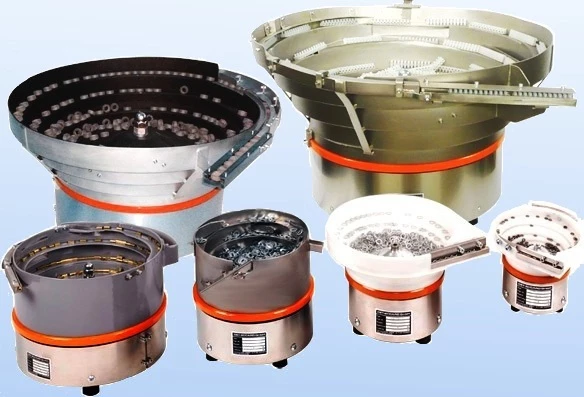
I designed an inverter for vibration tank ( photo below ) it issimply an H bridge with 500 V 20 A mosfets the frequency and duty is variable with STM32F103 the vibrator worked for 5 minutes and one of the H-mosfet blow up the L-mosfetalso show 0 resistance so it is also fried I added ( 100 nF 1 KOhm in series snubber )paralel to DS of every mosfet I suspect that there was a collision of CHN1 and CHN1N pleaselook at my code and comment if there is posibility of collision ( turn ON at the same time ) Or is there a snubber ( hardware design ) problem ? ( no software problem ) thank youPWM_init(){
...............
TIM_TimeBaseStructure.TIM_Prescaler = 99;
TIM_TimeBaseStructure.TIM_CounterMode = TIM_CounterMode_Up;
TIM_TimeBaseStructure.TIM_Period = 14400;
TIM_TimeBaseStructure.TIM_ClockDivision = 0;
TIM_TimeBaseStructure.TIM_RepetitionCounter = 0;
TIM_TimeBaseInit(TIM8, &TIM_TimeBaseStructure);
TIM_OCInitStructure.TIM_OCMode = TIM_OCMode_Timing;
TIM_OCInitStructure.TIM_OutputState = TIM_OutputState_Enable;
TIM_OCInitStructure.TIM_OutputNState = TIM_OutputNState_Enable;
TIM_OCInitStructure.TIM_Pulse = 1000;
TIM_OCInitStructure.TIM_OCPolarity = TIM_OCPolarity_High;
TIM_OCInitStructure.TIM_OCNPolarity = TIM_OCNPolarity_High;
TIM_OCInitStructure.TIM_OCIdleState = TIM_OCIdleState_Set;
TIM_OCInitStructure.TIM_OCNIdleState = TIM_OCNIdleState_Set;
TIM_OC1Init(TIM8, &TIM_OCInitStructure);
TIM_OC2Init(TIM8, &TIM_OCInitStructure);
/* Automatic Output enable, Break, dead time and lock configuration*/
TIM_BDTRInitStructure.TIM_OSSRState = TIM_OSSRState_Enable;
TIM_BDTRInitStructure.TIM_OSSIState = TIM_OSSIState_Enable;
TIM_BDTRInitStructure.TIM_LOCKLevel = TIM_LOCKLevel_OFF;
TIM_BDTRInitStructure.TIM_DeadTime = 120;
TIM_BDTRInitStructure.TIM_Break = TIM_Break_Disable;
//Enable;
TIM_BDTRInitStructure.TIM_BreakPolarity = TIM_BreakPolarity_Low;
TIM_BDTRInitStructure.TIM_AutomaticOutput = TIM_AutomaticOutput_Disable;
TIM_BDTRConfig(TIM8, &TIM_BDTRInitStructure);
TIM_CCPreloadControl(TIM8, DISABLE);
TIM_ARRPreloadConfig(TIM8, ENABLE);
TIM_ITConfig(TIM8, TIM_IT_Update , ENABLE);
TIM_Cmd(TIM8, ENABLE);
TIM_CtrlPWMOutputs(TIM8, ENABLE);
}
------------------
main(){
.........................
while
(1){
Delay(2000);
// freq varies between 25 and 106 Hz and puls varies between %10 and %90
//freqpot and pulspot are ADC channels connectted to potantiometers
freqdisp=freqpotantiometer/5+250;
freq=2*freqdisp ;duty=90-pulspotantiometer/51;
period=7200000L/freq;puls=(period/100)*duty;
// I want you comment especially on below bit of code
// if the compare value is changed inbetween a PWM period
// is there a posibility of CHN1 and CHN1N being ON at the same time
// the ARR value is buffered but the compare registers are not as far as I know
if
((freqold!=freq)||(pulsold!=puls)){
TIM_SetCompare1(TIM8, puls);
TIM_SetCompare2(TIM8, puls);
TIM_SetAutoreload(TIM8,period); }
freqold=freq;pulsold=puls;
............
}
-----------------
void
TIM8_UP_IRQHandler(
void
){
TIM_ClearFlag(TIM8, TIM_FLAG_Update);
TIM_ClearITPendingBit(TIM8, TIM_IT_Update);
tim8tog++;
if
(tim8tog&0x1) {
TIM_SelectOCxM(TIM8, TIM_Channel_1, TIM_OCMode_PWM2);
TIM_CCxCmd(TIM8, TIM_Channel_1, TIM_CCx_Enable);
TIM_CCxNCmd(TIM8, TIM_Channel_1, TIM_CCxN_Disable);
TIM_SelectOCxM(TIM8, TIM_Channel_2, TIM_OCMode_PWM2);
TIM_CCxCmd(TIM8, TIM_Channel_2, TIM_CCx_Disable);
TIM_CCxNCmd(TIM8, TIM_Channel_2, TIM_CCxN_Enable); }
else
{
TIM_SelectOCxM(TIM8, TIM_Channel_2, TIM_OCMode_PWM2);
TIM_CCxCmd(TIM8, TIM_Channel_2, TIM_CCx_Enable);
TIM_CCxNCmd(TIM8, TIM_Channel_2, TIM_CCxN_Disable);
TIM_SelectOCxM(TIM8, TIM_Channel_1, TIM_OCMode_PWM2);
TIM_CCxCmd(TIM8, TIM_Channel_1, TIM_CCx_Disable);
TIM_CCxNCmd(TIM8, TIM_Channel_1, TIM_CCxN_Enable); }
}