Welcome @jiafeimao, to the community!
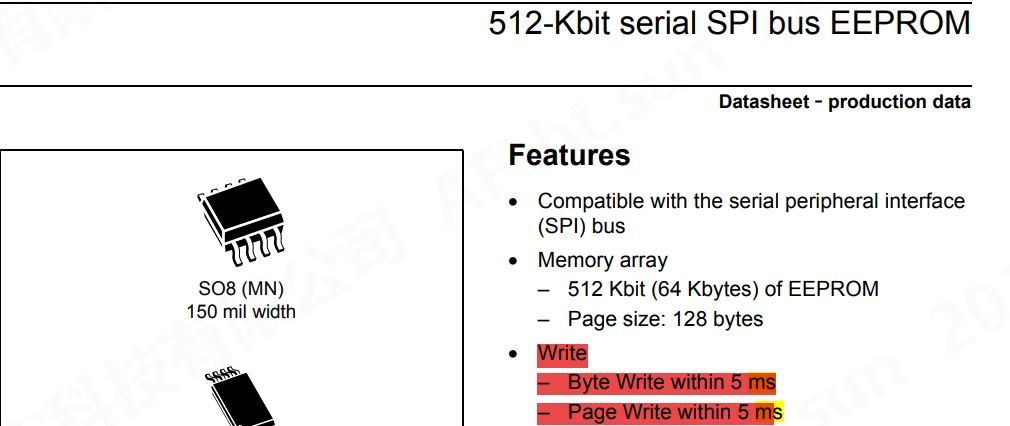
The various writes can in fact take a maximum of 5ms for a single byte (data sheet, table 19). However, the time can vary, which is why it makes sense to determine the end of the write process with bit WIP (bit 0 of the Read Status Register RDSR, see data sheet, section 6.3.1).
However, a Page Write takes just as long, but can write several bytes in one go from a given start address.
One more addition to the write cycle time tW - the data sheet mentions about this in a note in section 6.6:
The self-timed write cycle tW is internally executed as a sequence of two consecutive events: [Erase addressed byte(s)], followed by [Program addressed byte(s)].
When writing a byte, the byte must first be erased, which is why it can take a little longer for individual bytes. With page write, the bytes are erased in one go, which is why writing is significantly faster.
Does it answer your question?
Regards
/Peter
BTW: you should also take the opportunity to download the new data sheet, your extract is still from the old revision 23.
In order to give better visibility on the answered topics, please click on Accept as Solution on the reply which solved your issue or answered your question.