


ISPU 2.0 brings intelligence to the edge with IIS3DWB10IS
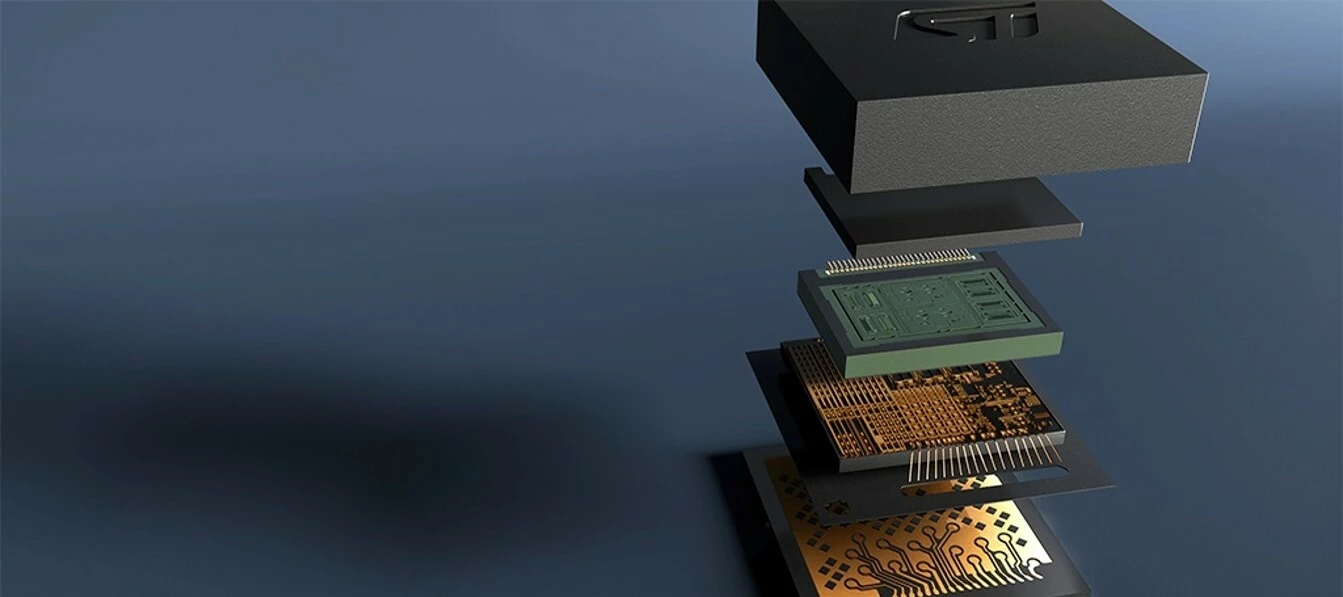
In smart manufacturing and industrial Internet of Things (IoT), vibration monitoring has become a critical enabler of predictive maintenance, anomaly detection, and operational efficiency. As systems become more connected and data-rich, developers face a familiar challenge: how to add more intelligence without increasing power consumption, cost, or design complexity.
With Intelligent Sensor Processing Unit (ISPU) 2.0, ST introduces a new way to build sensing systems. Instead of treating the sensor as a passive data source, ISPU 2.0 turns it into an intelligent edge node that can execute signal-processing and artificial intelligence and machine learning (AI/ML) workloads directly where the data is created. The first product to showcase this approach is IIS3DWB10IS, a high-performance MEMS vibration sensor that combines ultrawide bandwidth, high dynamic range, and ultralow noise with in-sensor processing capabilities for real-time analytics at the edge.
A new model for smart sensing
Traditional sensor architectures typically stream raw data to a host microcontroller (MCU) or to the cloud for further processing. The approach is effective, but it involves trade-offs: higher bandwidth use, more host wakeups, higher power consumption, and increased latency. In always-on or real-time applications, those trade-offs can quickly become limiting factors.
ISPU 2.0 changes the equation by embedding a tiny, ultralow-power processing engine directly in selected ST MEMS sensors. As a result, the sensor can filter, analyze, and classify data locally, and forward only meaningful information to the host. Instead of continuously transmitting raw samples, the system can react to high-level events such as a detected anomaly, a recognized pattern, or a meaningful vibration signature.
For developers, this capability is a major step forward. It enables cleaner architecture, faster decisions, and a more efficient use of system resources. For end products, it can result in lower energy consumption, reduced maintenance costs, and better overall user experience.
IIS3DWB10IS: high-fidelity sensing meets embedded intelligence
The IIS3DWB10IS is designed for industrial use cases in which vibration quality matters. Its high-resolution sensing capabilities allow the device to capture machine behavior with exceptional clarity, making it well suited for applications such as predictive maintenance, condition monitoring, and fault detection.
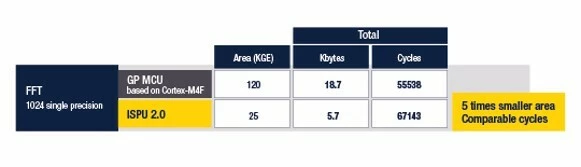
What makes the IIS3DWB10IS especially relevant is that it does not stop at sensing. Thanks to ISPU 2.0 and dedicated hardware accelerators, the device can run advanced processing directly on the sensor. Functions such as FFT, RMS, filtering, and envelope detection can be executed locally, helping extract meaningful features and detect events in real time.
This combination is powerful for several reasons:
- Faster response times: decisions are made at the point of measurement.
- Lower data traffic: only useful information leaves the sensor.
- Simpler host designs: processing is partially offloaded from the MCU.
- Better power efficiency: especially important in always-on systems.
- More scalable designs: intelligence can be added without redesigning the full platform.
Put simply, the IIS3DWB10IS can help engineers build smarter vibration-monitoring systems that are both high-performing and cost-effective.
Why ISPU 2.0 matters
ISPU 2.0 is more than a feature, it is a new architecture for edge sensing. It brings computation closer to the physical world and allows developers to move from raw-data acquisition to local interpretation and decision-making.
This is particularly important in industrial IoT, where systems often need to be:
- always-on
- reliable
- energy-efficient
- responsive in real time
- easy to maintain and scale
By handling part of the processing inside the sensor itself, ISPU 2.0 reduces the burden on the host MCU and the communication bus. It also opens the door to more modular designs, where the sensor becomes an active participant in the system rather than just a measurement source.
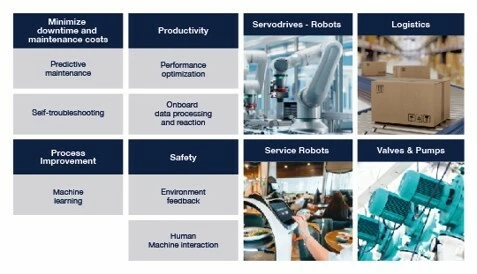
ST’s approach also supports a wide range of applications beyond vibration monitoring. Depending on the use case, ISPU 2.0 can be used for activity recognition, gesture detection, anomaly detection, and other embedded intelligence tasks where local decisions provide clear value.
A faster path from model to deployment
To make development practical, ST provides a complete ecosystem around ISPU 2.0.
Developers can use:
- MEMS Studio for sensor configuration, testing, and deployment.
- ST Edge AI Core for model optimization and code generation.
- ST Edge AI Developer Cloud for no-code AI development and benchmarking.
- ISPU GitHub resources with examples, tutorials, libraries, and reference algorithms.
This ecosystem is designed to shorten the path from idea to implementation. Whether users are starting from a classical signal-processing algorithm or an AI/ML model, the workflow helps optimize it for the ISPU architecture and deploy it on hardware more quickly.
For engineering teams, this can significantly reduce development effort. For product teams, it can accelerate time to market, while for end users, it can bring smarter, more responsive products to market sooner.
Built for the future of industrial sensing
The combination of IIS3DWB10IS and ISPU 2.0 reflects a broader shift in sensing technology: from passive data capture toward intelligent, context-aware edge perception.
This creates new opportunities for industrial monitoring systems that need to be both precise and efficient. It also gives developers a scalable platform for adding intelligence where it matters most: at the edge.
Get started
To explore ISPU 2.0 and IIS3DWB10IS further, here are a few good starting points:
- Check the IIS3DWB10IS product page for technical details and specifications
- Try MEMS Studio and ST Edge AI Core to start building and deploying your first application
- Explore the ISPU GitHub repository for examples, tutorials, and reference implementations
- Use ST Edge AI Developer Cloud to accelerate experimentation and model benchmarking
First published on Aug 05, 2026