

Vibration monitoring with MEMS sensors: real-time edge processing with IIS3DWB10IS and ISPU 2.0
Summary
Vibration sensing is key when monitoring machine health and detecting signs of trouble before failures cause expensive downtime. STMicroelectronics high-precision MEMS accelerometers make this monitoring possible.
Introduction
A motor can show several signs of change, such as ultrasound, vibration, audible noise, and excessive heat.
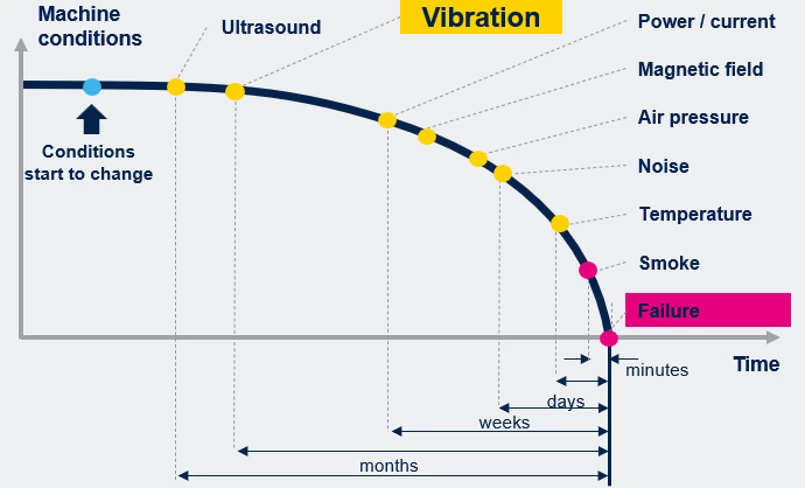
This article focuses on vibration sensing, where new MEMS devices can detect small signals and identify possible faults before they occur. In predictive maintenance applications, the correct sensor depends on bandwidth requirements. A Fast Fourier Transform (FFT) can quickly provide information about the frequency components of normal equipment vibration. Once the vibration profile is defined, continuous vibration sensing and analysis can detect abnormal patterns and provide an early warning of problems. These patterns may relate to normal operation and require routine adjustment or component replacement. They may also indicate another issue, such as lubrication failure.
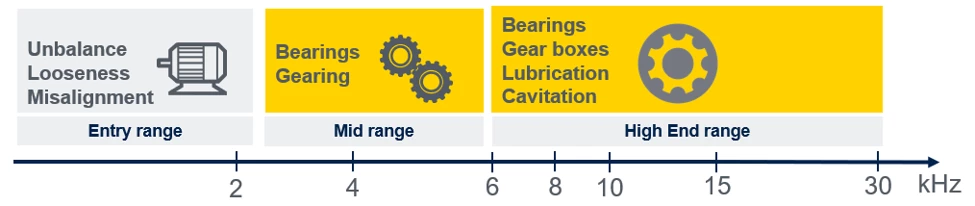
When high bandwidth is required, piezoelectric sensing technology is the dominant solution, but it is not always the best solution. New MEMS vibration sensor technology delivers piezoelectric-like performance.
The new IIS3DWB10IS MEMS sensor combines high-bandwidth capability with very low noise, which makes even small changes visible.
Reliable machines can benefit from this sensor:
- In factories, detect tiny misalignments or worn-out parts.
- In smart buildings, monitor heating, ventilation, and air conditioning (HVAC) units and pumps to keep the environment stable and energy-efficient.
- In robotics, keep movement precise and controlled.
- In electric vehicles, monitor the motor and help ensure safety and reliability on the road.
To learn more about the MEMS sensor technology that enables these applications, watch this video:
Some numbers on IIS3DWB10IS
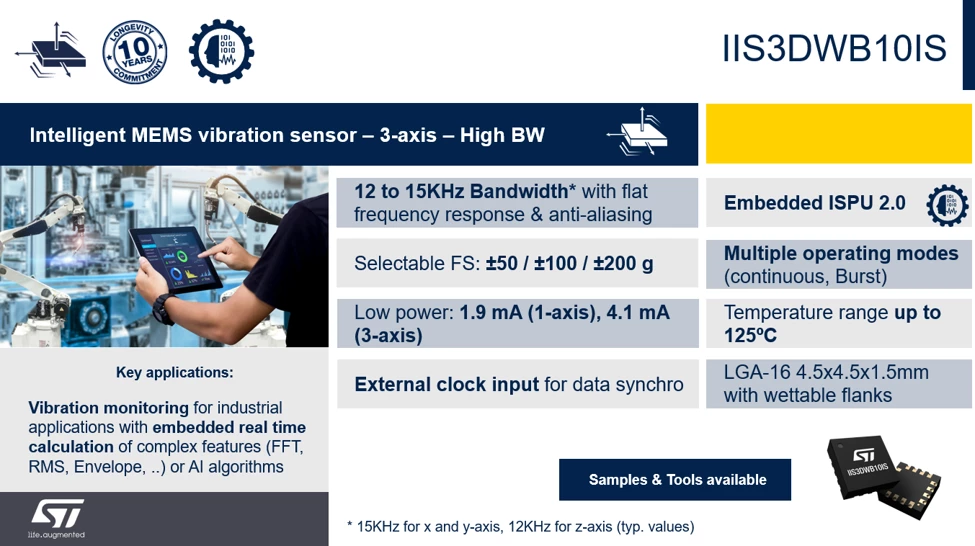
The new IIS3DWB10IS sensor allows accurate measurement of vibrations above 10 kHz. Typical values are 15 kHz on X and Y axes, and 12 kHz on the Z axis. The dynamic range is very large, up to 200 g. All is combined with a noise floor as low as 35 µg/sqrt(Hz).
This is comparable to the noise performance of piezoelectric sensors at a lower cost. The IIS3DWB10IS delivers equivalent accuracy and sensitivity and adds digital-sensing advantages, including smaller size, lower power consumption, simplified electrical and mechanical design, and greater flexibility in computational partitioning.
The IIS3DWB10IS is suitable for harsh environments. It supports an extended temperature range and operates reliably up to 125°C, with low noise over an ultrawide and flat frequency range.
The new ISPU 2.0
Besides a dedicated buffer for data storage, the IIS3DWB10IS also contains an intelligent sensor processing unit (ISPU) to process data at the edge.
ISPU 2.0 (intelligent sensor processing unit) introduces new hardware accelerators for real-time signal processing and AI at the edge. These accelerators make frequently used functions faster and more power efficient.
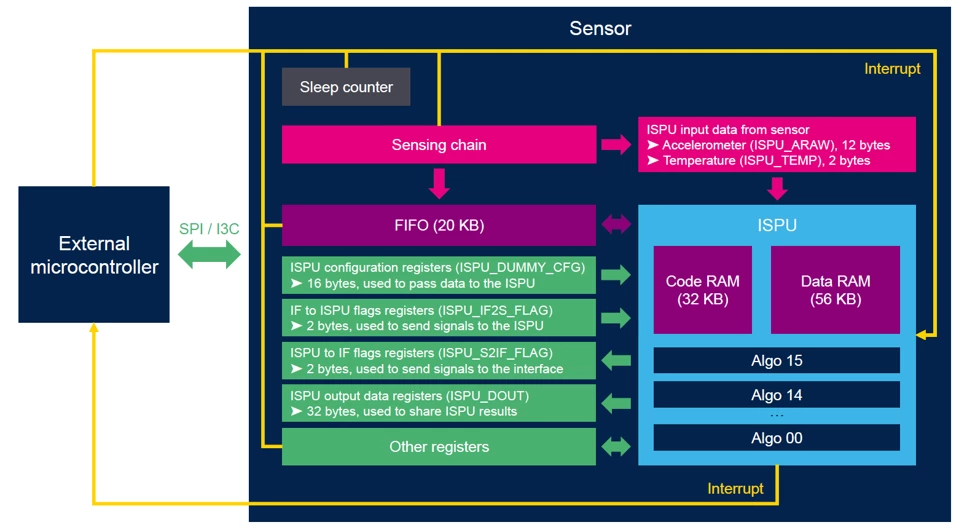
The ISPU core is C-programmable and contains on-chip program and data random-access memory (RAM). With 40 MIPS and 40 MFLOPS digital signal processing, the ISPU 2.0 delivers up to four times the processing performance of the previous generation. In addition, the ISPU 2.0 sensor interface supports data transfer with the MEMS circuitry that is six times faster.
Software libraries are provided to help execute typical vibration monitoring algorithms in the ISPU, including FFT, filtering, velocity severity, and anomaly detection. For updates, see the GitHub repository: https://github.com/STMicroelectronics/st-mems-ispu
Thanks to edge AI processing capabilities, the IIS3DWB10IS supports accurate and continuous monitoring without frequent battery recharging or replacement.
With self-configurability functions, the sensor can optimize its settings in real time without a host processor. This adaptability ensures power savings without compromising the quality of sensing.
ST MEMS ecosystem for IIS3DWB10IS
The ST ecosystem of tools is composed by software packages and GitHub examples to reduce development and integration time for algorithms in the IIS3DWB10IS.
In terms of software, ST Edge AI Core fully supports the IIS3DWB10IS, which converts pre-trained edge AI models into C code. The ISPU-Toolchain with MEMS Studio then enables deployment of C code algorithms to the IIS3DWB10IS sensor.
A set of optimized, ready-to-use libraries is available to complement AI algorithms. These libraries include fast Fourier transform (FFT), root mean square (RMS), and several types of filtering.
The figures below show a demo of an FFT algorithm running on the ISPU to monitor the vibration in a bearing system. In addition to a specific tool for FFT monitoring on real-time data, MEMS Studio can evaluate ISPU outputs, such as the output of the FFT library running at the edge.
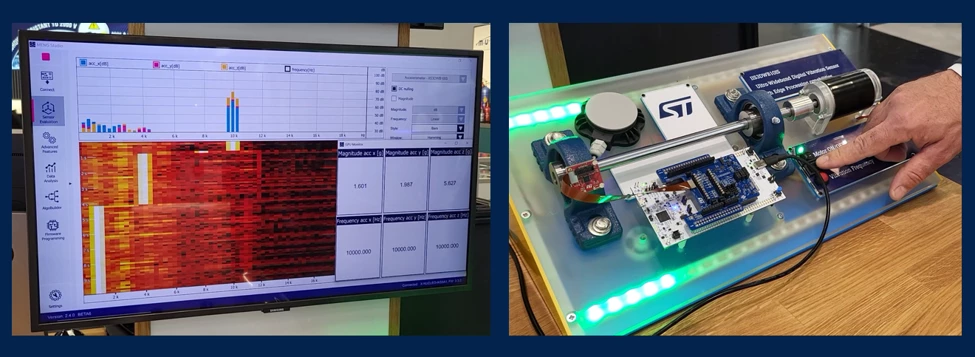
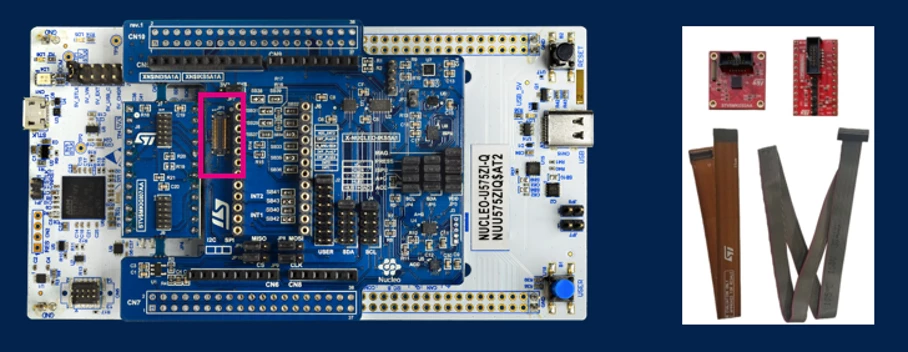
In the demo the STEVAL-MKI253KA evaluation kit is used. The evaluation kit allows the IIS3DWB10IS sensors to be connected to the X-NUCLEO-IKS5A1 expansion board for STM32 Nucleo, through the flex cable provided in the kit.
The STEVAL-MKI253KA is also compatible with other STMicroelectronics boards for evaluation, development, and prototyping.
If a custom board is used, you can leverage the C drivers and examples available on the dedicated GitHub repository: https://github.com/STMicroelectronics/STMems_Standard_C_drivers/tree/master/iis3dwb10is_STdC
Conclusion
With STMicroelectronics MEMS sensors you can easily develop your vibration monitoring application. An ecosystem of tools (boards and software) is provided to facilitate sensor evaluation and application development.
Stay tuned on the latest innovations in MEMS industrial sensors, a dedicated webinar will be available on September 15, 2026.
Related links
- Discover more about the new IIS3DWB10IS: https://www.st.com/content/st_com/en/campaigns/iis3dwb10is-advanced-vibration-sensor-for-next-gen-predictive-maintenance-mems-mc4indu.html
- Start your evaluation with STEVAL-MKI253KA (IIS3DWB10IS evaluation kit): https://www.st.com/en/evaluation-tools/steval-mki253ka.html
- Explore the ISPU examples on the GitHub repository: https://github.com/STMicroelectronics/st-mems-ispu
- Find documents (including datasheet and application note) in the product page: https://www.st.com/en/mems-and-sensors/iis3dwb10is.html
- Watch a dedicated webinar on September 15, 2026: https://content.st.com/mems-vibration-sensors-webinar.html
- Learn how to create a new ISPU configuration starting from a C template: https://community.st.com/mems-and-sensors-62/how-to-create-a-new-ispu-configuration-starting-from-a-c-template-168406
