
Question
I have a huge accuracy loss (way above what is expected in the datasheet) on ADC reading when increasing the sampling rate. I get that the accuracy is supposed to decrease but I sample at only 200 kHz on the STM32H47AI which is supposed to go up to 3
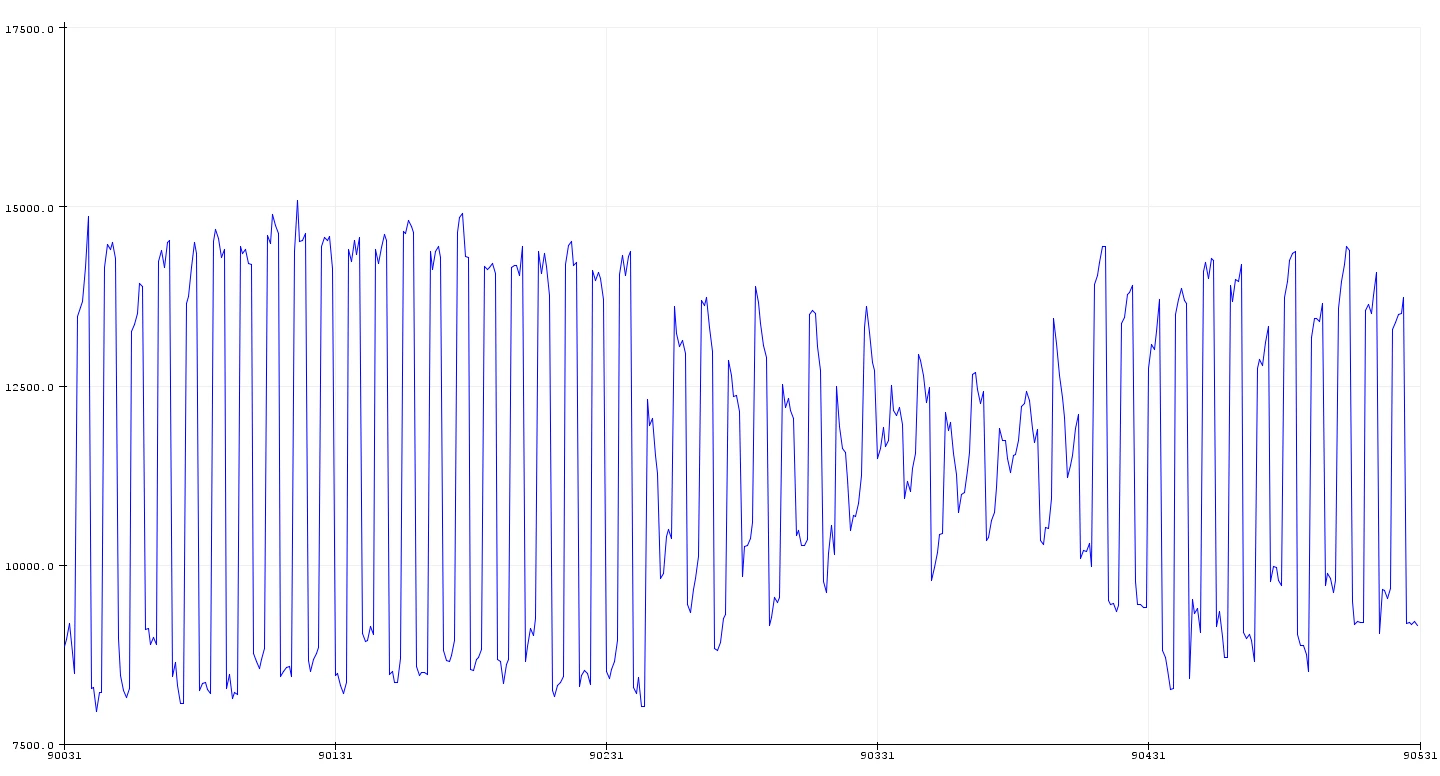
Considering the fact that I can no longer make a difference between waveforms sent at 1kHz (sin and triangular) I am wondering about what I did code wrong in my ADC initialization to mess up my results that much. Below is a 1kHz sin I get for my 200 kHz sampling rate (code below). I use an external Vref MAX6225ACPA to stabilize my reference.
/******Summary**********/
/*
Use ADC1 channel 13 on PC3 triggered by timer 1 (PRESC 19 and ARR 47)
ADC->DR is read by the DMA in double buffer mode and circular
*/

void ADC_Init(void) {
 /*******************Clocks**************************/
 SET_BIT(RCC->AHB4ENR, RCC_AHB4ENR_GPIOCEN_Msk); //GPIOA clock
// /********************Port config************************/
 SET_BIT(GPIOC->MODER, GPIO_MODER_MODE3_0);
 SET_BIT(GPIOC->MODER, GPIO_MODER_MODE3_1);
 CLEAR_BIT(GPIOC->PUPDR, GPIO_PUPDR_PUPD3_0);
 CLEAR_BIT(GPIOC->PUPDR, GPIO_PUPDR_PUPD3_1);
 SET_BIT(SYSCFG->PMCR, SYSCFG_PMCR_PA0SO_Msk | SYSCFG_PMCR_PA1SO_Msk | SYSCFG_PMCR_PC2SO_Msk | SYSCFG_PMCR_PC3SO_Msk);
 SET_BIT(RCC->AHB1ENR, RCC_AHB1ENR_ADC12EN_Msk); //ADC12 clocks
 delay(1000);

 /********************ADC voltage regulator***************/
 CLEAR_BIT(ADC1->CR, ADC_CR_DEEPPWD_Msk); //END DEEPPWD
 SET_BIT(ADC1->CR, ADC_CR_ADVREGEN_Msk); //ENABLE ADC VOLTAGE REG
 delay(1000);//WAIT VOLTAGE REG
 /******************ADC clock*****************************/
 SET_BIT(ADC12_COMMON->CCR, ADC_CCR_CKMODE_0 | ADC_CCR_CKMODE_1);
 /*******************ADC Prescaler************************/
 SET_BIT(ADC12_COMMON->CCR, ADC_CCR_PRESC_0 | ADC_CCR_PRESC_1 | ADC_CCR_PRESC_3);
 /*******************Input Mode***************************/
 CLEAR_BIT(ADC1->DIFSEL, ADC_DIFSEL_DIFSEL_13); //Single Ended
 /********************INput Preselection******************/
 SET_BIT(ADC1->PCSEL, ADC_PCSEL_PCSEL_13);//Chan 13
 /********************ADC calibration*********************/
 CLEAR_BIT(ADC1->CR, ADC_CR_ADCALDIF_Msk);
 SET_BIT(ADC1->CR, ADC_CR_ADCAL_Msk);
 while (ADC_CR_ADCAL & ADC_CR_ADCAL_Msk != 0) {}
 delay(100);
 SET_BIT(ADC1->CR, ADC_CR_ADCALLIN_Msk);
 SET_BIT(ADC1->CR, ADC_CR_ADCAL_Msk);
 while (ADC_CR_ADCAL & ADC_CR_ADCAL_Msk != 0) {}
 delay(100);
 /**********************ADC BOOST*************************/
 SET_BIT(ADC1->CR, ADC_CR_BOOST_0 | ADC_CR_BOOST_1);
 /*******************ADC Enable***************************/
 SET_BIT(ADC1->ISR, ADC_ISR_ADRDY_Msk);
 SET_BIT(ADC1->CR, ADC_CR_ADEN_Msk);
 while (ADC_ISR_ADRDY & ADC_ISR_ADRDY_Msk != 1) {}
 SET_BIT(ADC1->ISR, ADC_ISR_ADRDY_Msk);
 /********************ADC RES*****************************/
 CLEAR_BIT(ADC1->CFGR, ADC_CFGR_RES_0 | ADC_CFGR_RES_1 | ADC_CFGR_RES_2);//16 bit res
 /********************ADC Data Management*****************/
 SET_BIT(ADC1->CFGR, ADC_CFGR_DMNGT_0 | ADC_CFGR_DMNGT_1);//DMA Circular mode
 /********************OVRMODE*****************************/
 SET_BIT(ADC1->CFGR, ADC_CFGR_OVRMOD_Msk); //Erase old data
 /********************CONT/Single/Discont*****************/
 CLEAR_BIT(ADC1->CFGR, ADC_CFGR_DISCEN_Msk); // discontinuous mode disabled
 CLEAR_BIT(ADC1->CFGR, ADC_CFGR_CONT_Msk); // cont disabled
 /***********************First chan to be converted**************/
 SET_BIT(ADC1->SQR1, ADC_SQR1_SQ1_3 | ADC_SQR1_SQ1_2 | ADC_SQR1_SQ1_0);
 /********************Trigger Detection*******************/
 SET_BIT(ADC1->CFGR, ADC_CFGR_EXTEN_0 | ADC_CFGR_EXTSEL_1 | ADC_CFGR_EXTSEL_3);//Trig rising edge Timer TRGO1
 CLEAR_BIT(ADC1->CFGR, ADC_CFGR_EXTEN_1 | ADC_CFGR_EXTSEL_0 | ADC_CFGR_EXTSEL_2 | ADC_CFGR_EXTSEL_4);
 /********************Sample Time reg*********************/
 SET_BIT(ADC1->SMPR2, ADC_SMPR2_SMP13_0 ); //2.5 CLCK Cycles| ADC_SMPR2_SMP13_1 | ADC_SMPR2_SMP13_2
 /********************ADC IT******************************/
// SET_BIT(ADC1->IER, ADC_IER_EOCIE_Msk | ADC_IER_EOSMPIE_Msk | ADC_IER_OVRIE_Msk );//| ADC_IER_EOSIE_Msk | ADC_IER_OVRIE_Msk
// NVIC_EnableIRQ(ADC_IRQn);
// NVIC_SetVector(ADC_IRQn, (uint32_t)&ADC_IRQHandler);
}